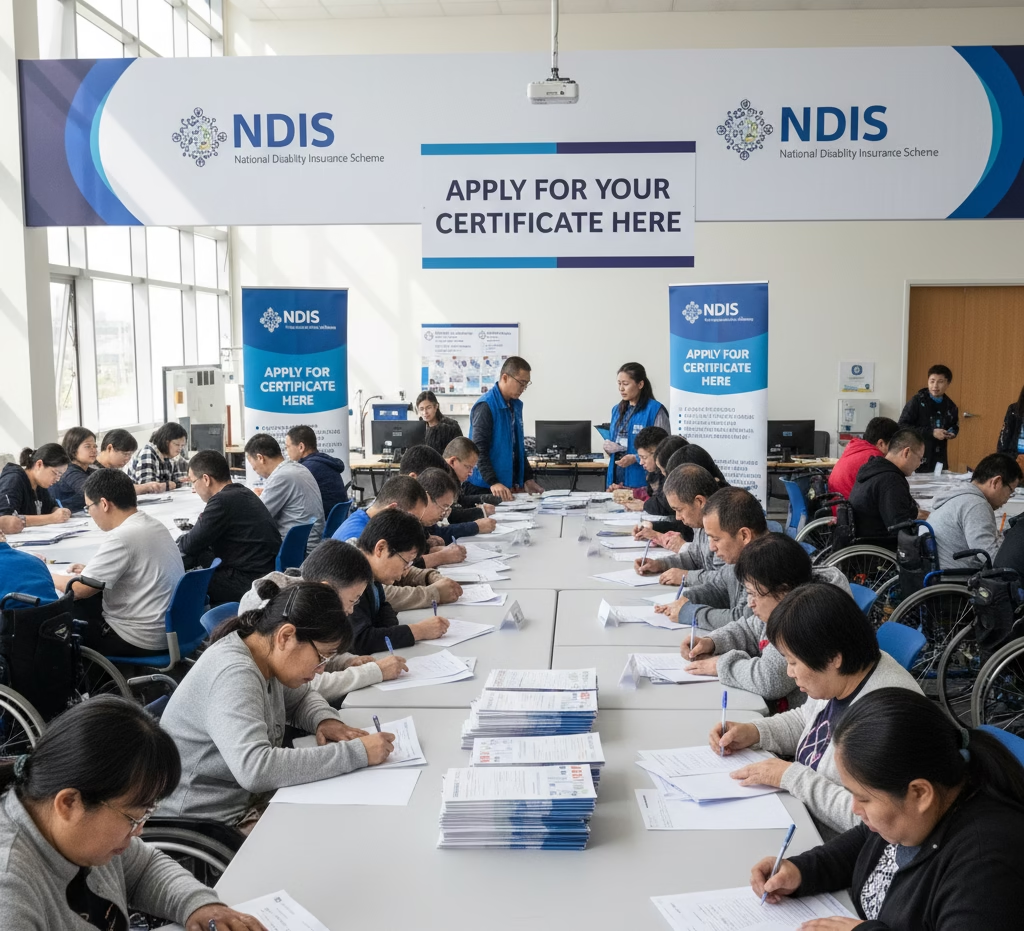
Understanding the NDIS Certificate
In Australia, the NDIS Certificate represents formal approval from the NDIS Quality and Safeguards Commission, confirming that a provider has met every requirement under the NDIS Practice Standards. Furthermore, holding this certificate demonstrates that your organisation delivers safe, compliant, and high-quality supports therefore, it’s essential for anyone planning to operate as an NDIS provider. In addition, it reassures participants that your services meet national quality expectations. Moreover, for many new providers, obtaining this certification is the first major step toward building a trusted reputation. Consequently, your business gains greater credibility within the disability support community. Similarly, participants and their families are more confident in engaging your services. As a result, you strengthen your professional standing and eligibility for future NDIS opportunities. Ultimately, the NDIS Certificate is more than paperwork; it’s a symbol of credibility, because it allows participants and stakeholders to trust your services and compliance commitment.
What Is an NDIS Certificate?
An NDIS Certificate is an official document issued once your organisation successfully completes the NDIS registration or renewal process. It verifies:
- Compliance with the NDIS Act 2013 and associated Rules.
- Positive outcomes from an external audit (verification or certification).
- Approved registration groups aligned to your supports.
- The registration period (usually 3 years) before renewal is required
This certificate is vital for billing the NDIS Commission and marketing yourself as a registered NDIS provider in Australia.
Why You Need an NDIS Certificate
Whether you’re a start-up provider or an existing organisation expanding into NDIS supports, certification is mandatory for:
- Delivering funded supports under the NDIS Scheme.
- Accessing the NDIS Provider Portal (NDIS login) to manage participants.
- Meeting insurance, tender, and partnership requirements.
- Demonstrating compliance during mid-term or re-certification audits.
Without an NDIS Certificate, your business cannot legally claim or advertise NDIS funded services.
Step 1: Determine Your Registration Path
The first step is identifying whether you need Verification or Certification for your NDIS registration. First of all, this decision sets the direction for your entire application process. Generally, providers delivering low-risk supports require verification, while those handling complex or high-risk supports must complete certification.
Verification Pathway
- Best for sole traders or small providers delivering low-risk supports such as cleaning, transport, or community access.
- In this case, the audit involves a desktop review of your policies, insurance, and compliance evidence
Certification Pathway
- Applies to organisations delivering high-risk supports, including Supported Independent Living (SIL), Specialist Disability Accommodation (SDA), or Behaviour Support.
- Unlike verification, this requires a full on-site audit assessing your compliance against the NDIS Practice Standards.
Therefore, understanding the correct pathway early helps you prepare documentation correctly and avoid unnecessary delays. If you’re unsure, it’s best to consult an experienced NDIS consultant who can guide you in choosing the right path
Step 2: Prepare the Required Documentation
Once your registration pathway is clear, the next important step is preparing all the required documents. To begin with, gather every compliance and business record that demonstrates your organisation meets the NDIS Practice Standards. Typically, your NDIS application must include:
- Company ABN and legal entity details.
- Business insurance certificates (public liability, professional indemnity, workers comp)
- Policies & procedures aligned to the NDIS Practice Standards.
- Risk-management plans and incident-reporting frameworks.
- Worker screening clearances (NDIS Worker Check & WWCC).
- Evidence of qualifications, training, and participant safeguards.
Furthermore, make sure these documents are well-organised, consistent, and up to date. As a result, your auditor can review them quickly, reducing back-and-forth communication. In addition, double-check that your policies reflect your organisation’s daily operations not just generic templates. Ultimately, thorough preparation at this stage saves you time, money, and stress during the audit.
Step 3: Submit Your NDIS Application
Visit the official portal via you NDIS login and complete the Provider Application Form
Be sure to:
- Select the correct registration groups.
- Upload policies in accepted formats (PDF/Word).
- Confirm your main contact and business address.
- Pay the applicable application fee (if required).
Once submitted, you’ll receive an email from the Commission assigning an Approved Auditor to begin your compliance assessment.
Step 4: Undergo the Audit Process
Your appointed auditor will evaluate your organisation against the NDIS Practice Standards. The process generally involves:
- Document Review: Checking that your policies, incident management system, and governance frameworks meet requirements
- Staff Interviews: Ensuring employees understand policies, training, and client rights.
- Site Visit (Optional): For certification audits, auditors observe daily operations and participant support plans
At the end, you will receive an Audit Report highlighting compliant areas and any required corrective actions.
Step 5: Receive Your NDIS Certificate
Once the audit is complete and your application is approved, the NDIS Commission issues your official NDIS Certificate of Registration.
This certificate lists:
- Your legal entity name
- Registration groups
- Expiry date
- Conditions (if any)
You can now advertise your organisation as a Registered NDIS Provider and begin delivering services across Australia.
Step 6: Maintain Compliance
Registration doesn’t end with certification it is an ongoing commitment.
Providers must:
- Complete mid-term audits (for certification pathways).
- Keep staff qualifications and insurances current.
- Review and update policies regularly.
- Report incidents and restrictive practices promptly.
- Submit renewal applications before certificate expiry.
For ongoing support, visit Providers Consultant – Ongoing NDIS Provider Support
Expert Tip: Prepare Early for Renewal
Start preparing your renewal documentation at least six months before your certificate expires.
Early preparation prevents last-minute stress and ensures continuous service delivery with no gap in registration.
Need Help Getting Certified?
At Providers Consultant, we simplify the entire process from your initial NDIS application to post-audit compliance. Our expert consultants:
- Draft tailored policies and procedures.
- Liaise with approved auditors on your behalf.
- Guide you through the NDIS login portal and documentation submission.
- Support you through mid-term and re-certification audits.
Book a Free Consultation today at providersconsultant.com.au/contact-us/ and get your NDIS Certificate without the confusion.