
Accessing the National Disability Insurance Scheme (NDIS) can feel overwhelming, especially for people who are applying for the first time. Many applicants ask the same question: What are the four requirements for access to the NDIS? Moreover, understanding these eligibility criteria is essential, as they determine whether you can receive funded support through the NDIS. In addition, the requirements help the NDIA assess who needs ongoing support. Furthermore, clear evidence plays an important role in the decision process. For example, medical reports and functional assessments can strengthen an application. As a result, well-prepared applicants often experience smoother approvals. However, missing information may lead to delays. Therefore, learning the requirements early can make the process easier and more successful.
The NDIS provides reasonable and necessary supports to people living with a permanent and significant disability. Moreover, these supports help participants build independence, improve daily living skills, and participate more fully in their community. In addition, they aim to increase social and economic participation. For example, therapy services and assistive technology can help individuals achieve their goals. Furthermore, the NDIS focuses on long-term outcomes rather than short-term solutions. As a result, participants often experience improved quality of life. However, access to funding depends on meeting the eligibility criteria. Therefore, if you meet the access requirements and provide the right evidence, you may be able to receive NDIS funding. Consequently, preparing strong documentation can make a significant difference.
In this guide, we explain the four key eligibility requirements, the evidence you need, common reasons applications are rejected, and how to improve your chances of approval.
Understanding the NDIS Access Requirements
Before applying, it is important to understand what “access to the NDIS” means. Firstly, access requirements are a set of rules used by the National Disability Insurance Agency (NDIA) to decide who can join the scheme. Moreover, they help ensure funding goes to those who genuinely need support. In addition, these rules provide consistency in decision-making. For example, the NDIA reviews age, residency, and disability criteria for every applicant. However, not everyone who applies will meet the requirements. Therefore, understanding these rules early can help you prepare a stronger application.
What Does “Access to the NDIS” Mean?
Access to the NDIS refers to being accepted as a participant and receiving funded supports. To qualify, a person must show that their disability is permanent, affects their daily life, and requires ongoing support. Once accepted, participants work with the NDIS to create a personalised plan based on their goals and needs.
Why Access Requirements Matter
Access requirements help ensure that NDIS funding goes to those who need it most. They also support fair decision-making, consistent eligibility assessments, and responsible allocation of public resources. As a result, understanding the requirements early can save time and reduce delays.
The Four Requirements for Access to the NDIS
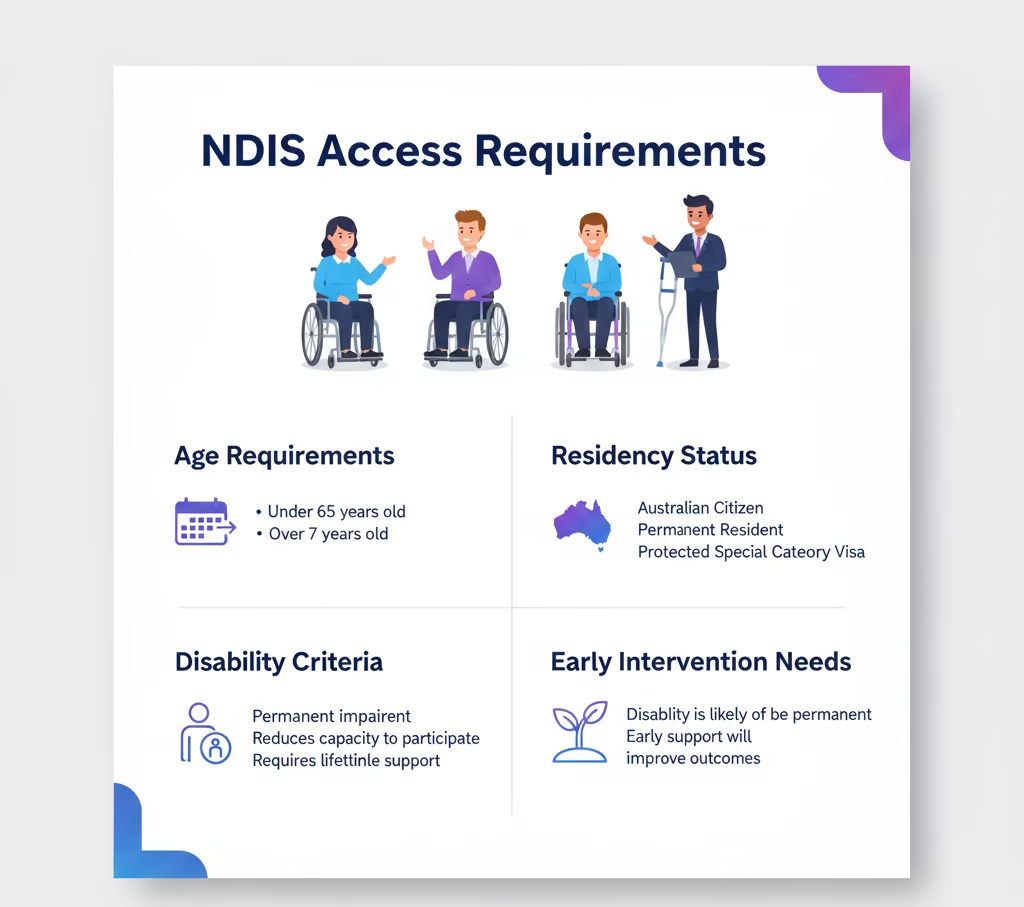
The NDIS uses four main eligibility criteria to determine who can access the scheme. These include:
- Age Requirement
- Residency Status
- Disability Requirement
- Early Intervention Requirement
Each requirement must be met for the NDIA to approve an application.
Age Requirement
To qualify for the NDIS, you must be under 65 years old when you apply. This rule ensures that people with disability access the most suitable support system.
If a person applies at 64 and is approved, they can remain in the NDIS after turning 65. However, individuals who are already 65 or older may need to access support through the aged care system instead.
Examples:
- A 45-year-old with permanent mobility issues may be eligible.
- A 70-year-old with the same condition will usually be referred to aged care supports.
This requirement is often referred to as NDIS age eligibility
If you want to learn more about evidence and reports, read our guide on what documents are required for the NDIS, which explains the paperwork you need for approval.
Residency Status
To meet NDIS residency requirements, applicants must be:
- an Australian citizen, or
- a permanent resident, or
- a Protected Special Category Visa holder
Applicants must live in Australia and provide documentation to prove their residency status. This may include:
- passport
- citizenship certificate
- visa documentation
- proof of address
Disability Requirement
The disability requirement is one of the most important criteria. The NDIS focuses on supporting individuals who have a permanent and significant disability that affects their daily functioning.
This means the disability:
- is likely to be lifelong
- impacts mobility, communication, social interaction, learning, or self-care
- requires ongoing support
- limits participation in everyday activities
This is commonly referred to as NDIS disability criteria.
The NDIA looks at how the disability affects functional capacity, not just the diagnosis. Therefore, applicants must show how their condition impacts daily life.
Early Intervention Requirement
The NDIS also supports eligible individuals through early intervention. This requirement applies when early support can:
- reduce future support needs
- improve skills and functioning
- prevent a condition from worsening
Early intervention is especially relevant for children with developmental delays and individuals who may benefit from timely therapy.
Professionals such as occupational therapists, speech pathologists, and physiotherapists often play a key role in this process.
This requirement also includes NDIS early intervention requirements.
What Evidence Do You Need to Meet the NDIS Requirements?
Meeting the access requirements is not enough on its own. The NDIA requires strong evidence to support your application.
Medical and Functional Evidence
Applicants should provide:
- GP or specialist reports
- diagnosis documents
- functional capacity assessments
- allied health reports
- hospital discharge summaries
Examples of Accepted Evidence
Commonly accepted reports include:
- Occupational therapy functional capacity assessments
- Psychologist reports
- Physiotherapy assessments
- Psychiatrist letters
- Neurologist or paediatrician reports
High-quality evidence increases the likelihood of approval.
Who Automatically Qualifies for the NDIS?
Many people believe that certain conditions automatically qualify for NDIS access. In reality, very few conditions guarantee eligibility.
Some conditions listed in the NDIS Operational Guidelines may provide quicker access; however, the NDIA still reviews functional impact.
The NDIA still makes a decision based on:
- evidence
- daily life impact
- long-term needs
Common Reasons NDIS Applications Are Rejected
NDIS applications are often rejected due to:
- insufficient evidence
- temporary or unclear diagnosis
- not meeting disability criteria
- age requirement not met
- residency issues
- inconsistent information
Most rejections occur because applicants do not provide enough functional evidence.
How to Improve Your NDIS Access Request
There are several ways to improve your chances of NDIS approval:
- gather strong evidence from qualified professionals
- clearly describe functional limitations
- request detailed assessments
- include real-life examples
- ensure reports explain ongoing support needs
Support coordinators, disability advocates, and allied health providers can assist with preparing applications. Additionally, regular communication and accurate documentation can help avoid delays.
Conclusion
Understanding what are the four requirements for access to the NDIS is an essential first step in the application process. To be eligible, applicants must meet the age, residency, disability, and early intervention requirements. Providing strong and clear evidence increases the likelihood of approval and supports a smoother process.
With the right preparation, applicants can access supports that improve independence, participation, and quality of life.
FAQs
Can you access the NDIS without a diagnosis?
Yes, in some cases. If you can provide strong functional evidence that shows a permanent and significant disability, the NDIA may still consider your application.
What if my disability is not permanent?
The NDIS generally requires permanent conditions. Temporary conditions usually do not qualify unless early intervention may significantly reduce long-term needs.
Does autism automatically qualify for the NDIS?
Not always. Many people with autism can access the NDIS; however, the NDIA still reviews how the condition affects daily functioning.
What documents do I need for NDIS access?
You may need medical reports, functional assessments, specialist letters, and evidence of residency.
Can someone over 65 access the NDIS?
People over 65 usually cannot join the NDIS for the first time. They may receive support through aged care programs instead.
How long does NDIS access approval take?
Approval times vary. It may take several weeks or months depending on evidence, assessments, and NDIA processing times.
For official eligibility details, visit the NDIS website, which provides updated information on access requirements and policy guidelines.