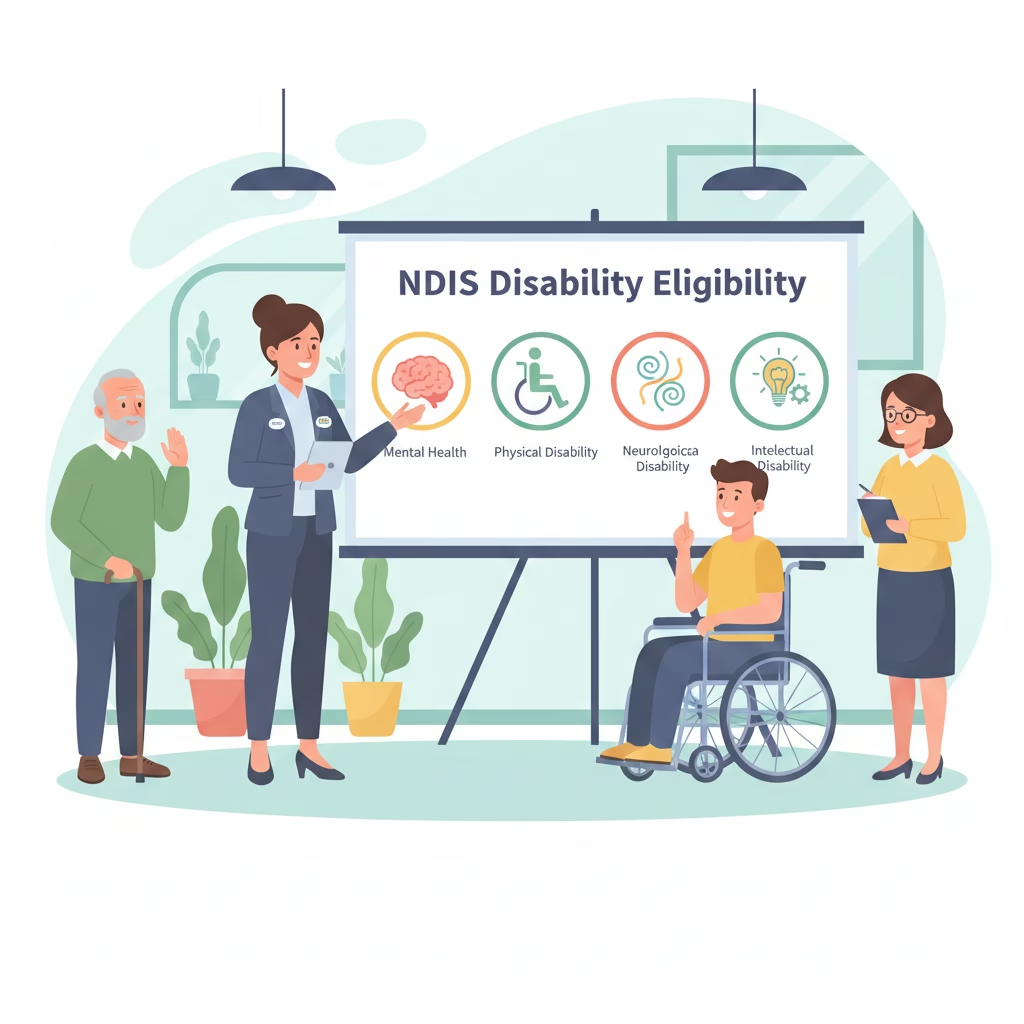
Understanding what disabilities are eligible for NDIS is one of the most common concerns for participants, families, and even service providers. Firstly, the National Disability Insurance Scheme (NDIS) provides funding to people with a permanent and significant disability that impacts their daily life. However, eligibility is not based on a diagnosis alone; instead, the NDIA assesses how the condition affects functional capacity. Moreover, this assessment focuses on daily tasks, safety risks, and independence levels. Additionally, the NDIA reviews long-term impacts rather than temporary conditions. Furthermore, evidence must clearly show functional limitations. For example, difficulties with mobility, communication, self-care, or learning may indicate eligibility. Therefore, understanding these functional requirements early is important. Ultimately, strong evidence increases your chances of approval. In summary, eligibility depends on what the person can or cannot do, not just on the disability name.
In this guide, we explain which disabilities may be eligible for NDIS, how eligibility is assessed, the types of evidence required, and common mistakes applicants make when submitting their access request.
What disabilities are eligible for NDIS? Complete disability list
Permanent
The disability is lifelong and will not fully improve.
Significant
It impacts daily living; for example, mobility, communication, self-care, learning, social interaction, in addition, decision-making, moreover, other functional tasks may also be affected. Therefore, these limitations play a major role in assessing eligibility. Ultimately, they show how significantly the disability affects everyday life.
Requires Ongoing Support
The person needs regular support or specialist services.
Supported by Evidence
Medical and functional assessments must show how the disability affects everyday activities.
what disabilites are eligible for NDIS? common disability list
Below is a list of disability categories recognised by the NDIS. Although this list is not exhaustive, it still represents the most common conditions approved for funding. Furthermore, these categories help applicants understand eligibility more clearly. In addition, they highlight how the NDIA reviews functional impact. Ultimately, this information guides people in preparing stronger applications. Therefore, reviewing each category carefully can improve your understanding of NDIS eligibility.
Autism Spectrum Disorder (ASD) – Disability Eligible for NDIS
ASD is one of the most frequently accepted disabilities under the NDIS.
Eligibility depends on the level of severity:
- Level 2 and Level 3 are typically eligible
- Level 1 may require strong functional evidence
NDIS looks at challenges with:
- social communication
- behaviour and sensory needs
- learning and emotional regulation
Intellectual Disability
People with mild, moderate, severe or profound intellectual disability commonly qualify.
Functional challenges may include:
- learning
- memory
- abstract thinking
- daily living skills
A cognitive assessment (WISC/Vineland) is usually required.
For a deeper understanding of how eligibility works, read our full guide on NDIS registration requirements available on our website.
Psychosocial Disability (Mental Health) eligible for NDIS
Psychosocial disabilities may include:
- schizophrenia
- bipolar disorder
- severe depression or anxiety
- borderline personality disorder
- PTSD
To be eligible, the condition must be:
- enduring
- significantly impact daily functioning
- Require ongoing support
A psychological or psychiatric assessment is essential.
Neurological Conditions eligible for NDIS
Many neurological disorders cause permanent impairment and qualify. For example, conditions such as multiple sclerosis and Parkinson’s disease meet NDIS criteria. Moreover, stroke and traumatic brain injuries often lead to long-term functional challenges. In addition, disorders like epilepsy may require ongoing support. Furthermore, degenerative neurological conditions typically result in significant daily limitations. Ultimately, these factors make neurological conditions commonly eligible for NDIS funding.
- Multiple sclerosis (MS)
- Parkinson’s disease
- Epilepsy
- Stroke
- Traumatic brain injury
- Huntington’s disease
- Cerebral palsy (Level III–V typically automatic)
Physical Disabilities eligible for NDIS
People with long-term physical impairments often qualify, especially when mobility is affected. For instance, reduced strength or coordination can limit daily tasks. Moreover, ongoing pain or restricted movement may affect independence. In addition, mobility challenges often require regular support. Furthermore, assistive technology or therapy needs can influence eligibility. Ultimately, significant mobility impacts increase the likelihood of NDIS approval.
Examples include:
- spinal cord injury
- muscular dystrophy
- limb loss
- chronic pain conditions with functional impact
- arthritis (severe, permanent)
Functional evidence from physiotherapy or occupational therapy is important.
Sensory Disabilities
Vision impairment
Eligible when classified as “legal blindness” or severe vision loss. Moreover, the NDIA considers how the vision loss affects daily functioning. In addition, applicants must provide evidence from an eye specialist. For example, clinical eye reports should describe visual acuity and field loss. Furthermore, functional assessments must explain how vision impacts daily tasks. However, the NDIA will only approve cases that show long-term functional limitation. Therefore, documented functional impact is essential for approval. Ultimately, strong evidence increases the chances of meeting NDIS eligibility criteria.
Hearing impairment
Eligible when severe or profound hearing loss is present.
Cochlear implant users may also qualify depending on function.
Genetic & Chromosomal Conditions
These conditions often cause significant developmental delays or multi-system impairments.
Common eligible conditions include:
- Down syndrome
- Fragile X syndrome
- Prader–Willi syndrome
- Angelman syndrome
- Rett syndrome
- Williams syndrome
Developmental Delay (Children Under 7)
Children aged 0–6 may be eligible under Early Childhood Early Intervention (ECEI).
Delays may include:
- speech and language development
- fine or gross motor skills
- cognitive delay
- social and emotional delay
NDIS assesses delay severity and impact on daily functioning.
Disabilities That Are Not Automatically Eligible
Some conditions are not automatically eligible and require strong evidence:
- ADHD
- dyslexia and learning disorders
- chronic pain (without functional assessment)
- mild autism (Level 1)
- mild anxiety or depression
- temporary injuries
- short-term medical conditions
The NDIA focuses on functional impact, not labels.
How Does the NDIA Assess what disabilities are eligible for NDIS
Eligibility is based on functional capacity, not just diagnosis.
The NDIA assesses 6 functional areas:
- Mobility
- Communication
- Social interaction
- Learning
- Self-care
- Self-management
You must show substantial reduction in one or more areas.
What evidence shows what disabilities are eligible for NDIS
To show that a disability is permanent and significant, applicants must provide:
Medical reports
From GPs, specialists, neurologists, paediatricians, psychiatrists.
Functional capacity assessments
From occupational therapists, physiotherapists, speech pathologists, psychologists.
Supporting documents
Carer statements
School or workplace reports
Daily living examples
The NDIA prefers reports that are:
- recent
- detailed
- specific
- evidence-based
Common Reasons application for what disabilities are eligible for NDIS are rejected
Applications often fail because:
- only diagnosis is provided
- functional impact is not explained
- no allied health assessments
- condition is temporary
- inconsistent information
- illegible or short reports
Tips to Improve Approval Chances
- Provide clear examples of daily challenges
- Include multiple functional assessments
- Request detailed reports from specialists
- Ask therapists to include permanence statements
- Keep documentation up to date
- Explain safety risks and support needs
- Prepare a full evidence pack
Conclusion
Understanding what disabilities are eligible for NDIS is crucial for anyone applying for support or assisting a participant. Firstly, the NDIS does not approve people based on diagnosis alone; instead, eligibility depends on the permanent and significant impact of the disability on daily life. Moreover, the NDIA assesses how the condition affects functional capacity. Additionally, strong evidence from medical and allied health professionals strengthens the application. For example, detailed functional assessments clearly show daily challenges. Furthermore, well-prepared documentation reduces delays and confusion. Ultimately, with the right evidence and documentation, applicants can access supports that enhance independence, safety, and quality of life
If you are unsure whether a disability qualifies, firstly, evidence-based reports and functional assessments will make the strongest difference. Additionally, they help demonstrate the real impact on daily life. Furthermore, they strengthen your application by providing objective detail. Ultimately, strong evidence increases your chances of NDIS approval..
FAQs
Does the NDIS have an official disability list?
Yes, but eligibility depends more on functional impact than the diagnosis name. In fact, the NDIA focuses on how the condition affects daily life. Moreover, they consider whether the disability is permanent. Additionally, they review whether ongoing supports are required. For example, limitations in mobility or communication may influence eligibility. Ultimately, functional impact determines whether someone qualifies.
Can mental health conditions be eligible?
Yes, if the condition is permanent and significantly affects daily functioning. Moreover, the NDIA checks how the disability impacts everyday tasks. Additionally, they assess the level of ongoing support required. For instance, difficulties with communication or mobility may indicate eligibility. Therefore, the effect on functional capacity is crucial. Ultimately, strong evidence helps confirm eligibility.
Is ADHD eligible for the NDIS?
Sometimes, but it requires strong functional evidence. However, it is not automatic. Moreover, the NDIA assesses how the condition affects daily life. In addition, detailed reports from professionals strengthen the application. Therefore, clear functional evidence is essential for approval.
Is autism Level 1 eligible?
Yes, but you must provide clear functional impact assessments. Moreover, these assessments should explain how the disability affects daily tasks. In addition, they must include real-life examples that show the level of support required. For example, difficulties with mobility, communication, or self-care help demonstrate eligibility. Therefore, strong functional evidence increases the chances of approval.
Do children need a diagnosis to apply?
No. Children under 7 can apply through Early Childhood Early Intervention (ECEI). Moreover, this pathway supports children with developmental delays. In addition, it does not require a formal diagnosis. For example, delays in speech, motor skills, or behaviour may qualify. Therefore, ECEI provides early support to improve long-term outcomes.
For official eligibility rules, visit the NDIS access requirements page on the government website.